Project activities and news
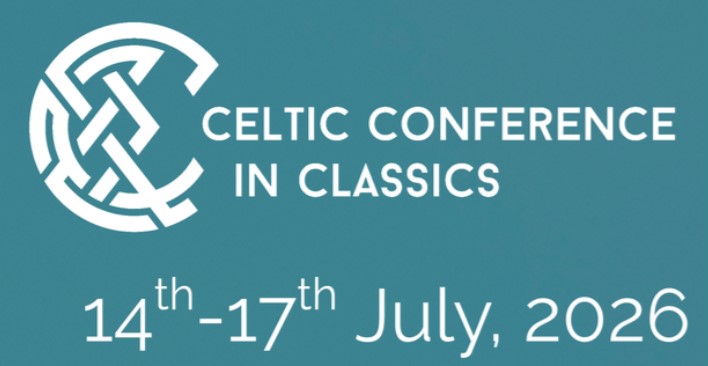
CALL FOR PAPERS: Epic through numbers. Digital and quantitative approaches to Greek and Latin epic.
14-17 July at the Maynooth CCC conference.A long tradition of scholarship has taken interest in the quantitative features of epic poetry, ranging from the distribution of Homeric formulas to the evolving structure of the hexameter; from macrostructural aspects such as the number and arrangement of books to microstructural studies of sound patterns; from linguistic features such as tense or neologisms to social features including social networks and economic exchange.
Read more...
DICES Database of Greek and Latin Epic Speech is online!
December 18th 2025 marks another milestone for the DICES project: the DICES database, of which a prototype accessible to project members only had been running since 2022, has now officially been launched with new and improved functionalities and is accessible to anyone!
We will keep on improving the database and adding new data. A number of new texts and authors are expected to be added in the course of 2026. Marking the launch of the first open access version and the publication of Direct Speech in Greek and Latin Epic volume, we have now also archived a stable version of the dataset at the Mount Allison University Libraries and Archives, accessible through Borealis, the Canadian Dataverse Repository, at https://doi.org/10.5683/SP3/N8LS2Y.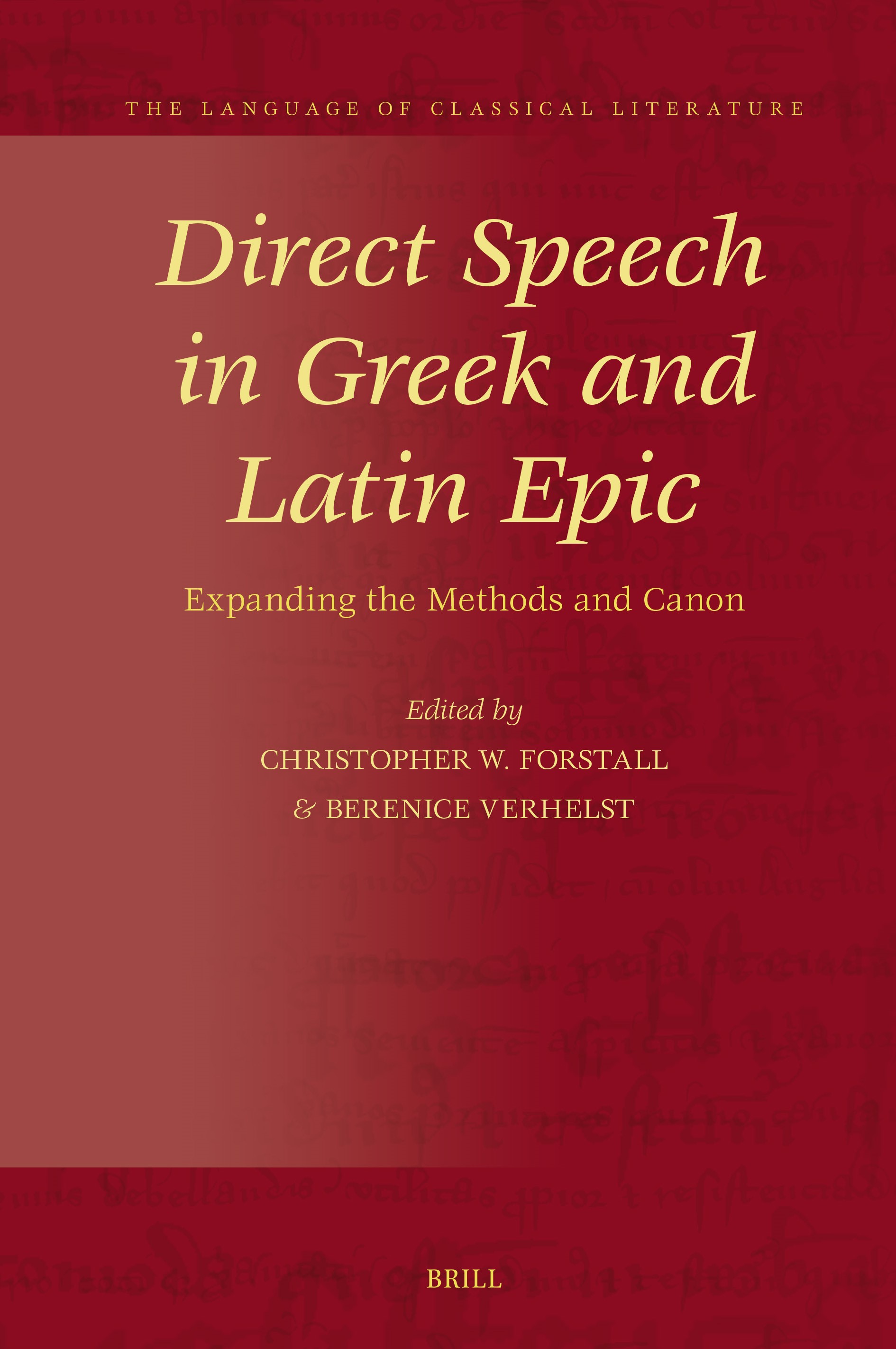
Direct Speech in Greek and Latin Epic: Expanding the Methods and Canon
Available open access on Brill.com!
December 8th 2025 marks a milestone for the DICES project: the edited volume Direct Speech in Greek and Latin Epic (ed. C. Forstall and B. Verhelst) has now been published and is ready to inspire future scholars working on epic and direct speech. Don't forget to check out its digital appendix on this website!
DICES paper at CCC 2025 in Coimbra
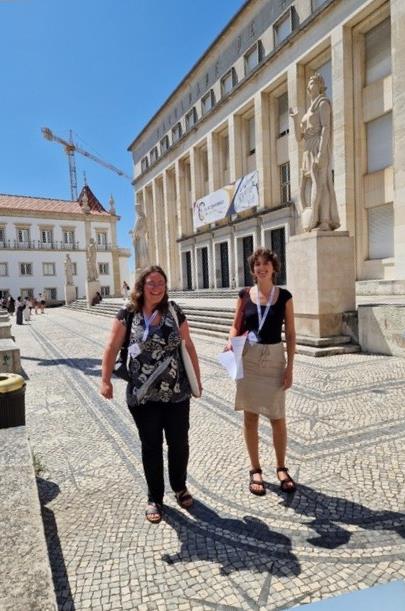
Berenice Verhelst and Lotte Knijn participated in the Celtic Conference in Classics 2025 in Coimbra, July 15th-18th 2025 in the panel Transtextual Characters in Ancient Greek and Roman Epic: Conceptualization and Case Studies (TRANSEPIC) organized by Silvio Bär and Judith Hendriksma.
Berenice Verhelst and Lotte Knijn were present in person to present a paper co-authored by the DICES team (Forstall-Knijn-Verhelst).Title of the presentation: Aphrodite as a Mother and a Goddess in Greek and Latin Epic from Homer to Late Antiquity
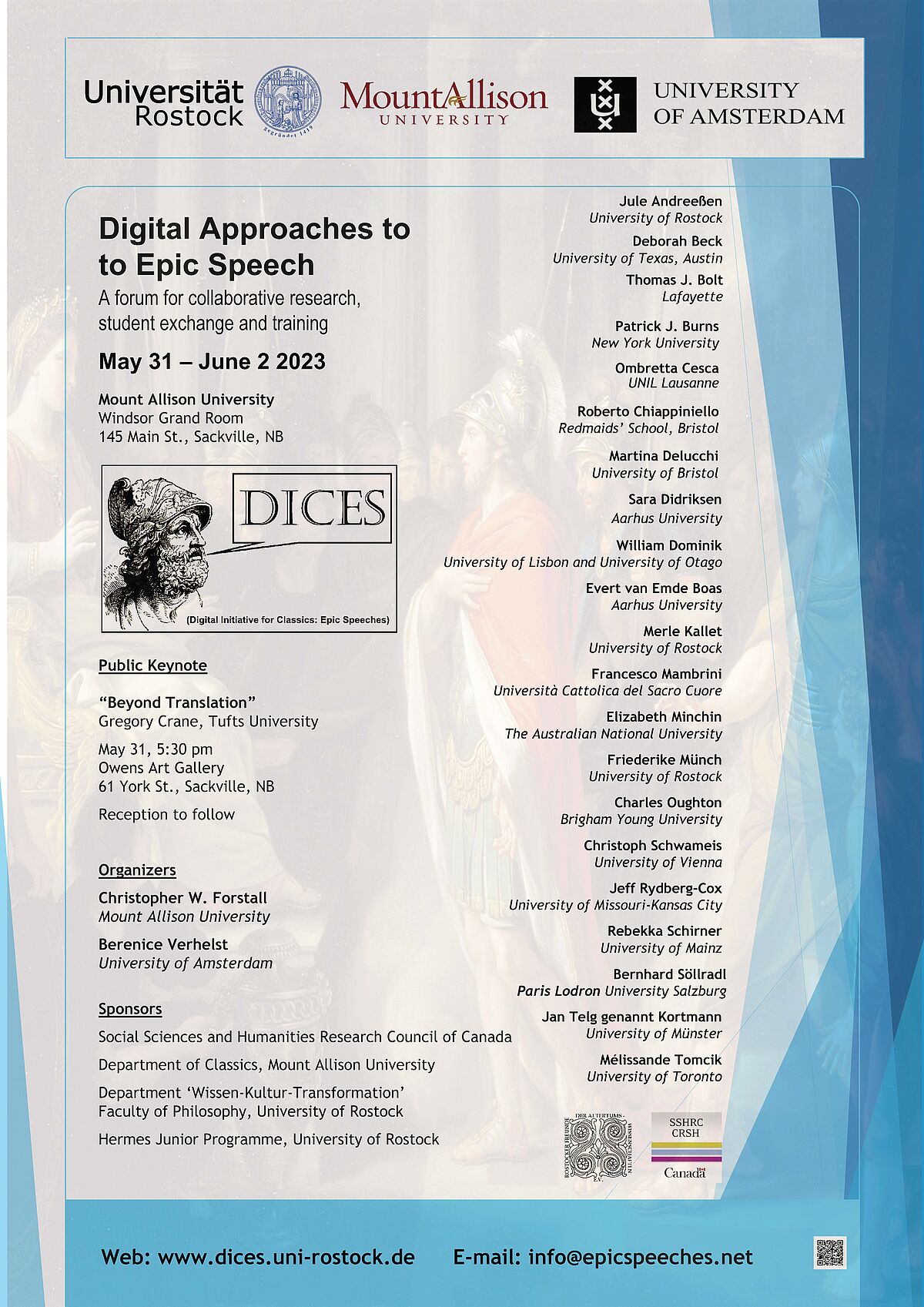
Digital Approaches to Epic Speech: a forum for collaborative research, student exchange and training
31 May –2 June 2023, Mount Allison University, New Brunswick, Canada
Weds. 31 May
1:00–2:00 Registration
2:00–2:30 Welcome
Christopher Forstall and Berenice Verhelst
2:30–3:30 Session 1
Read more...-
Characters’ Intentional Repetitions in Homeric Epic
- Ombretta Cesca, UNIL Lausanne (via Zoom)
- Respondent: Elizabeth Minchin
-
κερτομέω in context(s) in Greek epic poetry
- Deborah Beck, University of Texas at Austin
- Respondent: Ombretta Cesca (zoom)
3:30–4:00 Break
4:00–5:00 Student Session 1
-
The goddess Juno as a transtextual speaker in the epic tradition from Virgil to Silius Italicus
- Jule Andreeßen, University of Rostock
-
Mother Mary in the Homerocentones of Empress Eudocia
- Sara Didriksen, Aarhus University
5:30–6:30 Keynote Address: “Beyond Translation”
Gregory Crane, Tufts University
(Owens Art Gallery)
6:30–7:30 Reception (Owens Art Gallery)
Thurs., 1 June
8:00–9:30 Breakfast hackathon (Jennings Banquet Room)
10:00–11:00 Session 2
-
The Language of the Homeric Heroes. Towards a treebank-based approach
- Francesco Mambrini, Università Cattolica del Sacro Cuore
- Respondent: Deborah Beck
-
Epic Speech and intertextuality: Astyoche’s prayer from Homer to the third century
- Martina Delucchi, University of Bristol
- Respondent: Rebekka Shirner (zoom)
11:00–11:30 Break
11:30–1:00 Session 3
-
Evaluating Workplace Relationships in the Homeric Iliad: The Respective Contributions of DICES, ToM, and RET
- Elizabeth Minchin, The Australian National University
- Respondent: Jeff Rydberg-Cox (zoom)
-
Speech and emotion in Valerius Flaccus’ Argonautica
- Rebekka Schirner, University of Mainz (Zoom)
- Respondent: William Dominik
-
Listen to mummy! Epic mother speech and persuasion from Homer to Nonnus
- Berenice Verhelst, University of Amsterdam and
- Christopher Forstall, Mount Allison University
- Respondent: Francesco Mambrini
1:00–2:30 Lunch
2:30–4:00 Session 4
-
Clustering speakers and concepts in ancient epic as nodes within a network
- Jeff Rydberg-Cox, University of Missouri-Kansas City (zoom)
- Respondent: TJ Bolt
-
Towards a Measure of Dialogism in Latin Epic
- Patrick Burns, New York University
- Respondent: Bernhard Söllradl
4:00–4:30 Break
4:30–5:30 Student Session 2
-
Jupiter's speech characteristics: a socio-linguistic approach to the impact of status and gender in intra-divine discourse in Roman epic
- Merle Kallet, University of Rostock
-
Rhetorical strategies of divine deceit: The Olympian gods as master manipulators in Roman epic
- Friederike Münch, University of Rostock
Fri., 2 June
8:00–9:30 Breakfast hackathon (Jennings Banquet Room)
9:30–11:00 Session 5
-
Exhortations in Silius Italicus’ Punica
- Christoph Schwameis, University of Vienna and
- Jan Telg genannt Kortmann, University of Münster (Zoom)
- Respondent: Berenice Verhelst
-
Duelling Speeches and Livian Narrators in Silius Italicus' Punica
- Charles Oughton, Brigham Young University
- Respondent: Christoph Schwameis (zoom)
-
‘Desine grande loqui’. Characters and speeches in the Psychomachia of Prudentius
- Roberto Chiappiniello, Redmaids' School, Bristol (zoom)
- Respondent: Mélissande Tomcik
11:00–11:30 Break
11:30–1:00 Session 6
-
Speaking Fake News in Flavian Epic
- Mélissande Tomcik, University of Toronto
- Respondent: Jan Telg gen. Kortmann (zoom)
-
Between Epic and Epideictic: direct speech in Claudian’s Political Poems
- Valéry Berlincourt, University of Geneva (zoom)
- Respondent: Patrick Burns
-
Themes, Emotions, And ‘Swerves’ in the Speeches of Achilles in Greek and Latin Literature
- William Dominik, University of Lisbon, University of Otago
- Respondent: Roberto Chiappiniello (zoom)
1:00–2:30 Lunch
2:30–3:30 Session 7
-
Quantifying Genre. A Study in Tragic Voices in Roman Epic
- Bernardt Söllradl, Paris Lodron University Salzburg
- Respondent: Charles Oughton
-
A Stylometric Analysis of Speech in Latin Epic Poetry
- TJ Bolt, Lafayette College
- Respondent: Martina Delucchi
3:30–4:00 Break
4:00–5:30 Round Table
Mount Allison University is located within the territory of Mi’kma’ki, the unceded, ancestral territory of the Mi’kmaq.
Funding for this event was provided by a SSHRC Connection Grant, the University of Rostock, the University of Amsterdam, and Mount Allison University.
Support for the DICES project was provided by a SSHRC Insight Development Grant, the University of Rostock, and by a Mount Allison University President’s Research and Creative Activities Award.
Special thanks to the University of Rostock’s Digital Library Division for hosting the DICES server.
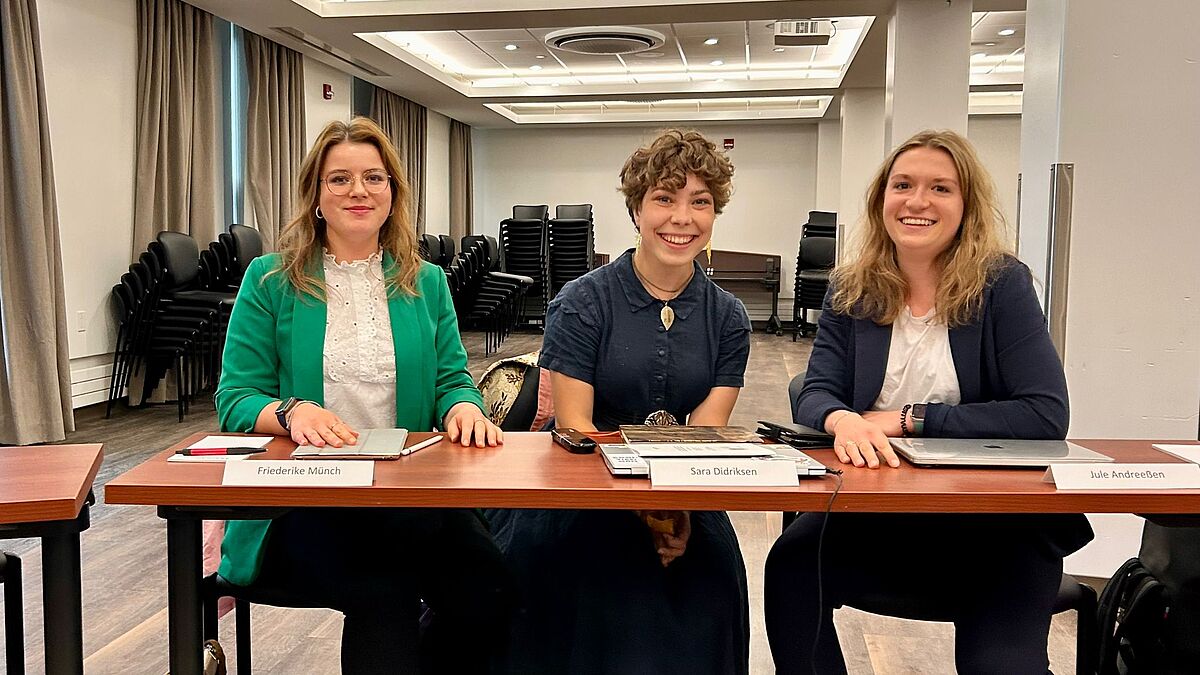
Student project at Mt. Allison conference
Der zweite DICES-Workshops an der Mount Allison University stellte eine erneute Möglichkeit dar, das internationale DICES-Team in Person zusammenzubringen. So besuchten die Mount Allison University in einem zweiwöchigen Aufenthalt auch unsere dänische Studentin Sara Didriksen sowie die drei Studentinnen aus Rostock, Jule Andreeßen, Merle Kallet und Friederike Münch, welche seit Sommer 2022 auch in eigenen Forschungsanliegen tatkräftig durch das DICES-Projekt unterstützt werden.
Read more...Der Aufenthalt diente in erster Linie der Finalisierung der einzelnen Forschungsprojekte der Studentinnen. Die persönliche Arbeit im ganzen Team und der gegenseitige Austausch halfen allen, ihre Projekte voranzubringen und die Arbeit mit der DICES-Software zu vertiefen. Anschließend nutzten sie die einmalige Gelegenheit, ihre Projekte auf dem Workshop selbst erstmals einem Fachpublikum vorzustellen. Sie fügten sich nahtlos unter die weiteren Teilnehmer:innen des Workshops ein, erhielten wertvolles Feedback und Anregungen und stärkten ihre Kontakte zu den Teilnehmer:innen, welche sie bereits auf dem Workshop in Rostock kennengelernt hatten.
Daneben nutzten sie den Aufenthalt aber natürlich auch dafür, den Campus und das Team der Mount Allison University kennenzulernen und die Gegend rund um Sackville zu erkunden. So besuchten sie u.a. den charmaten Farmers' market von Sackville, die Crown Prince Frederik Island und Moncton.
Es war für alle ein gelungener Aufenthalt und ein freudiges Wiedersehen!
Wir danken der Mount Allison University, den Aufenthalt auf dem Campus möglich gemacht zu haben.

DICES-Workshop (I): Digital Approaches to Direct Speech Representation in Greek and Latin Epic
30 June–2 July 2022, Rostock
Thursday 30.06.2022 – Internationales Begegnungszentrum Session 1: DICES – progress report 13.30–14.30 Registration 14.30–15.30 Welcome address: Nicola Hömke (University of Rostock); DICES project and database updates: Simone Finkmann (University of Rostock), Christopher Forstall (Mount Allison University), Berenice Verhelst (University of Amsterdam) 15.30–16.00 Coffee break Session 2: LOD project groups Read more...
Canadian research assistants at the Rostock Workshop
The first workshop of the DICES project group “Digital Approaches to Direct Speech Representation in Greek and Latin Epic” from 30 June to 2 July 2022 also marked the first opportunity during which we were able to unite most members our international team at the University of Rostock.
We are very grateful that two key members of our Canadian team, our student research assistants Anne Lautenschlager and Ava Waugh from Mount Allison University in New Brunswick, were able to join us at the Heinrich Schliemann-Institute of Ancient Studies in Rostock, joining forces with the student research assistants at Rostock
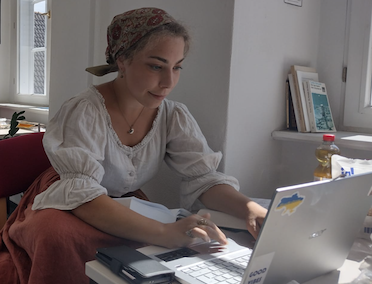
Student researcher from Aarhus joins the DICES Team
As part of her MA programme in Classics at Aarhus (Aarhus supervisor: Professor Evert van Emde Boas), she will be doing a research project with DICES, as one of the international partners of the Rostock students’ HERMES-project.
For her own research paper she will be working on speech attributions in Homer and the Homerocentones. You see her here working hard on data entry for the Homerocentones, which will soon to be added to the DICES database.
Welcome to the team, Sara!
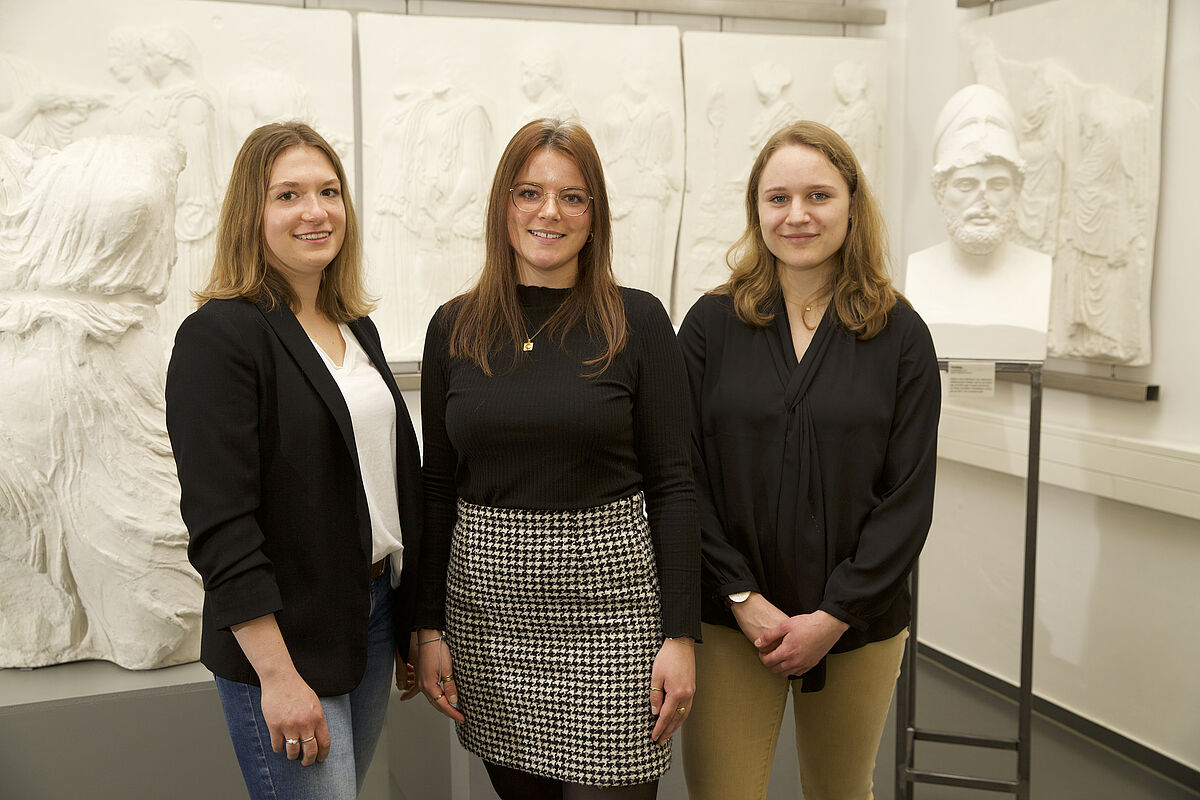
Rostock students receive research funding from the HERMES-Junior-Programme
Three students from the Heinrich Schliemann Institute of Ancient Studies, Jule Andreeßen (English, Latin), Merle Kallet (History, Greek, Latin) and Friederike Münch (German, Latin), are receiving a one-year research grant from the HERMES-Junior-Programme of the University of Rostock to conduct a joint project with students from Denmark, Canada, and the Netherlands. In their project, they will apply selected digital research methods to analyse direct speech acts by the Olympian gods in Roman epic poetry from Virgil to Silius Italicus.
Among other activities, two joint group meetings of all participants are planned at the Heinrich Schliemann-Institute of the University of Rostock (from the end of June to early July 2022) and at Mount Allison University in Canada (from the end of May to early June 2023).
Project group: Jule Andreeßen, Merle Kallet, Friederike Münch
Project title Die direkten Reden der olympischen Götter im römischen Epos von Vergil bis Silius Italicus
Project duration: 30 June 2022 – 30 June 2023
New DICES-Publication (March 2022)
Forstall, C. W./Finkmann, S./Verhelst, B.: Towards a linked open data resource for direct speech acts in Greek and Latin epic, Digital Scholarship in the Humanities 2022 (Open Access).
Abstract:
The Digital Initiative for Classics: Epic Speeches (DICES) research group reports here on preliminary work to integrate research on Greek and Latin epic speeches into the larger ecosystem of linked open data (LOD) for classical scholarship. The ability to collate speech data from different researchers and to leverage external repositories of texts and characters opens up new possibilities for interrogation of the epic corpus. We briefly survey the current state of scholarship on epic speeches and of the digital infrastructure on which we propose to build. We outline a model for harmonizing speech data across studies and aligning it with existing LOD standards. Finally, we discuss some early proof-of-concept results and the larger implications of this approach for the field. The long-term aim of the DICES project is to build a database of metadata on direct speech in Greek and Latin epic, not only covering canonical texts such as Homer and Virgil, but also including the less-studied texts of the late antique period, which will benefit greatly both from the increased accessibility and also from the diachronic perspective afforded by a corpus-based approach. The envisioned database also has the potential to include diachronic data from additional genres and languages at a later stage.
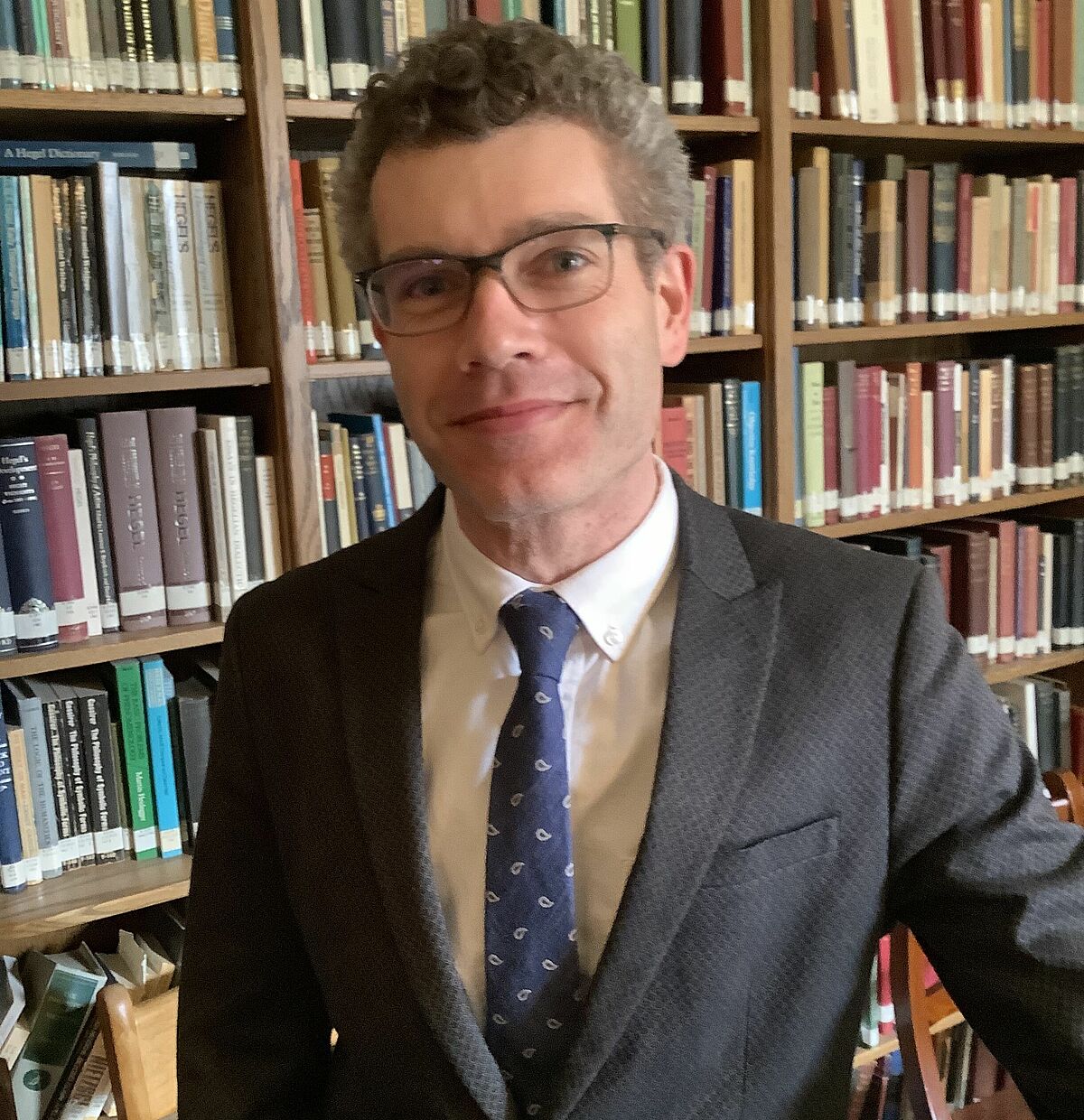
Mare Balticum Fellow (April - July 2022): Christopher Forstall
Mare Balticum Fellow Prof. Dr. Christopher Forstall at the Heinrich Schliemann-Institute of Ancient Studies from April 2022 to July 2022
The Prorector for Research and Knowledge Transfer supports interdisciplinary research stays (max. 3 months) of national and international scientists at the University of Rostock as part of the Mare Balticum Fellowship Program since 2019.
Prof. Dr. Christopher Forstall from Mount Allison University in New Brunswick, Canada, will stay at the Heinrich Schliemann Institute of the University of Rostock from April 20 to July 14, 2022 to conduct research within the framework of the DICES project.
Scheduled events with Professor Forstall at the University of Rostock:
- 17 May 2022, 1:00 p.m.: Interdisciplinary Networking Meeting (via Zoom).
- 7-10 June 2022, from 9 a.m. to 1 p.m: R-Workshop: "Digital Research Methods for Intertextual Media" (via Zoom)
- 30 June-2 July 2022: International Workshop "Digital Approaches to Direct Speech Representation in Greek and Latin Epic," IBZ and Heinrich Schliemann-Institute of Ancient Studies (hybrid event).
Panel at FIEC 2019 (London, July 5-8 2019)
panel title: Speech Representation in Ancient Epic from Homer to Nonnus
CLARKE HALL (IoE), Monday July 8, 3-5pm a. Deborah Beck (University of Texas at Austin, USA), Speech Representation in Homeric Epic – A Case Study b. Berenice Verhelst (Ghent University, Belgium), Adding Insult to Injury. Triumph speeches on the Epic Battlefield from Homer to Nonnus c. Christopher W. Forstall (Mount Allison University in New Brunswick, Canada), Distant Reading of Direct Speech in Epic: An Illustrated Workflow d. Round table discussion. Organiser: Simone Finkmann (Heinrich Schliemann-Institut für Altertumswissenschaften, University of Rostock, Germany) Chair: Christopher W. Forstall (Mount Allison University in New Brunswick, Canada)